
 |
| Mytek Empire Preamp/DAC/Streamer |
by Paul Elliott
Back at the Renaissance Schaumburg Hotel & Convention Center. Schaumburg, IL., Axpona 2022 showed that all is right in the world of home audio again. After two years of anxiety and shut-ins due to the pandemic, business as usual is back. I still feel more credit needs to be given to Gary Gill for taking a big risk and starting it all off with a successful Capital Audiofest (DC) last November, and Florida Expo fast on CAF’s heels in February.
Certainly, Axpona is now this country’s biggest show, and its problems are now far in the distant past. With reported 138 rooms and big crowds all three days. An unsubstantiated rumor was that attendance was in the multiple thousands (I heard 6500). About a week before the show I thought about how to even begin to cover this monstrous show. I was going to work smart and preselect the rooms to cover and get preliminary info. The energy Friday morning was exploding early and all caution was tossed out and I just dove in.
Certainly, Axpona is now this country’s biggest show, and its problems are now far in the distant past. With reported 138 rooms and big crowds all three days. An unsubstantiated rumor was that attendance was in the multiple thousands (I heard 6500). About a week before the show I thought about how to even begin to cover this monstrous show. I was going to work smart and preselect the rooms to cover and get preliminary info. The energy Friday morning was exploding early and all caution was tossed out and I just dove in.
Linear Tube Audio
To get the ball rolling, I visited familiar ground. Linear Tube Audio had two rooms (plus a Marketplace booth with Headgear). In their upper tier room was the MicroZOTL preamp, ZOTL Ultralinear + power amp, the very fine Lampizator Baltic 3 DAC, and the DeVore Super Nine Loudspeakers. This always is the controversial part of reviewing a show’s room. What we hear/notice first is the speaker. Are the speakers transparent enough to hear deeper into the system and is the system transparent enough to get out of the way of the music?
 |
| LTA Devore Loudspeakers |
All of LTA’s products are based on designs and licensed by David Bering. The MicroZOTL pre has five inputs,tape loop, and remote control. It is black hole silent, and completely neutral. The ZOLT Ultralinear + poweramp is 20 watts/ch and is stereo/mono switchable. The DeVore Super Nine speaker A 2.5-way design incorporating the revolutionary .75-inch textile tweeter first debuted in the gibbon X and two long-throw 7-inch paper cone woofers in a compact but wide bandwidth, very high-performance package, with a frequency response of 28Hz-30kHz, sensitivity of 91dB/W/M, and an impedance of 8 Ohms, 6 Ohms minimum.
This was a very fine-sounding system. I am very familiar with the LTA sound; I use the microZTL preamp in my reference system. This is my first hearing of the Devore Super Nines. I never questioned what I was hearing. I felt comfortable that I was getting into the recording just fine. This was a $31k to $32k system. Sounding quite good!
Spatial Audio X4 Premium
Stepping down in price point a bit but in no way less satisfying was the LTA room with the Spatial Audio X4 Premium. New to me was the front end (Streaming Qobuz direct via a MAC book) with the Holo Audio/Kitsume HiFi May DAC (top-of-the-line KTE). This R2R DAC is extreme in high tech and resolution. It will support DSD1024 native and PCM 1.536MHz output! Theoretically, it can do DSD2048; the PCM 3.072 MHz capability, however, was untested at this time.
 |
| Holo Audio/Kitsume HiFi May DAC |
The May is a DUAL mono DAC. So there is a dedicated DAC module for Left Channel and a dedicated Dac module for Right Channel. Also, each channel is individually powered by its dedicated Otype FLATWIRE transformer found in all three models. The company has found have found, after careful testing, this new transformer type outperforms any transformers they ever tested. Near zero leakage, improved dynamics, and overall spectacular performance. They are handmade for this DAC specifically and deliver the world-class performance you would expect.
Kitsume has worked hard to reduce the common click noise with all DACs when switching from DSD to PCM. This sound click sound has been reduced significantly with a special circuit design. The May DAC has the new and exclusive USB Enhanced module (L2 and KTE ONLY) which has our FPGA with the new Titanis 2.0 and custom firmware to improve USB Eye Pattern and reduce latency to near zero as well as reduce jitter to very low levels. The USB module has completely new code written to optimize performance and reduce latency significantly. Low-frequency performance (-40db) is also improved. The “enhanced” USB Xmos module is twice as powerful/capable as the one that is used in other models.
The Kitsume is a powerhouse of a DAC. The sound was extremely clean and free from any sharp edges.
New improved power supply circuit with high-performance multi-stage regulation circuit using Rubycon ZLH caps, Panasonic FC, Vishay Caps, or L2/KTE models with our exclusive HoloAudio Branded Caps (KTE model unique custom proprietary caps to replace Vishay caps). They are no longer using a common LVDS chipset and are now using a custom four-way circuit that isolates each line which further improves sound quality. As an example, the MCLK is isolated from the data line and this improves jitter spec. Also, there are TWO i2s ports in the May DAC. Each one can be individually configured pinouts to support all i2s products on the market. This is a powerhouse of a DAC. The sound was extremely clean free from any sharp edges.
Control was by the ZOTL Ultralinear + Integrated amp with very similar specs as micrZOTL pre and the Ultralinear + amp but in one chassis. The Spatial Audio X4 Premium is a true dipole, open baffle speaker floor stander with a sensitivity of 93db and frequency response of 32Hz to 20kHz.
Control was by the ZOTL Ultralinear + Integrated amp with very similar specs as micrZOTL pre and the Ultralinear + amp but in one chassis. The Spatial Audio X4 Premium is a true dipole, open baffle speaker floor stander with a sensitivity of 93db and frequency response of 32Hz to 20kHz.
Rega Audio
When an audiophile gets into a conversation with Mr. Average Joe about spending the equivalent of a Honda CRV for a bunch of boxes that play music and trying to explain the importance of getting emotion out of a recorded performance, the conversation usually goes into the opposite directions with both sides walking away and scratching their respective heads. I think about this a lot while walking into and out of these rooms with big price tags.
 |
| Budget-friendly Rega System 1 |
Then I happened into a room like the Rega System 1 room. Here is a $2,115 analog system that presents a nice sound stage. This system is certainly a gateway into our realm, or the perfect office or dorm room system for a kid going to college. This is an all-in-one analog solution. Rega System One has been around for a couple of years now and is designed to be simple to set up, easy to use, and deliver a true analog experience straight out of the box.
The Rega System One consists of the Planar 1 turntable, the io amplifier, Kyte loudspeakers, and all the cables you need. The io amplifier uses the same amplifier stage as the legendary Brio amplifier now re-designed to run at 30 W per channel into 8 Ω. The io features two line-level inputs, a moving magnet phono stage, and a high-quality headphone output socket offering plenty of connectivity options to expand your system.
The Rega System One consists of the Planar 1 turntable, the io amplifier, Kyte loudspeakers, and all the cables you need. The io amplifier uses the same amplifier stage as the legendary Brio amplifier now re-designed to run at 30 W per channel into 8 Ω. The io features two line-level inputs, a moving magnet phono stage, and a high-quality headphone output socket offering plenty of connectivity options to expand your system.
The Planar 1 turntable is a "Plug and Play" design that utilizes the RB110 tonearm, with pre-set bias and a factory-fitted Carbon cartridge. Set-up is possible in under 30 seconds; just add the counterweight and set the VTF.
The Planar 1 turntable is a "Plug and Play" design that utilizes the RB110 tonearm, with pre-set bias and a factory-fitted Carbon cartridge. Set-up is possible in under 30 seconds; just add the counterweight and set the VTF.
The Kytelound speakers are not going to give you any big bottom-end bass but the sound was just super at this price point. It was refreshing to experience a system like this at a major audio show that has systems approaching the stratosphere.
Sota Turntables
Since we are talking about analog and as a long-time owner of a SOTA turntable (since 1985, with a complete upgrade a few years ago), I looked forward to seeing what is new with this well-established company. Sota Turntables started in 1979 manufacturing Audiophile Grade Turntables in Oakland California. Soon Sota moved to Chicago and became SOTA Sales and Service, operated by Kirk and Donna Bodinet until 2018.
The Kytelound speakers are not going to give you any big bottom-end bass but the sound was just super at this price point. It was refreshing to experience a system like this at a major audio show that has systems approaching the stratosphere.
Sota Turntables
Since we are talking about analog and as a long-time owner of a SOTA turntable (since 1985, with a complete upgrade a few years ago), I looked forward to seeing what is new with this well-established company. Sota Turntables started in 1979 manufacturing Audiophile Grade Turntables in Oakland California. Soon Sota moved to Chicago and became SOTA Sales and Service, operated by Kirk and Donna Bodinet until 2018.
 |
| SOTA Nova |
In January 2018, Donna partnered with Christan Griego of Griego Sound Inventions with a full machine shop and wood shop to continue the next generation of State Of The Art Turntables. Christan Griego joined SOTA as the new President/Director of Development and Marketing effective January 2, 2018. Since this collaboration, SOTA is evolving into a high-tech company bringing a whole playbook of innovations and a complete range of new products to market.
The complete line encompasses a pathway from the very affordable Urban Series with turntables less than $2k to the Statement Series; the Cosmos starting at $9350, and the Millennia Eclipse base price of $10,750. The top tier tables are suspended tables with three models with vacuum hold-down systems.
The complete line encompasses a pathway from the very affordable Urban Series with turntables less than $2k to the Statement Series; the Cosmos starting at $9350, and the Millennia Eclipse base price of $10,750. The top tier tables are suspended tables with three models with vacuum hold-down systems.
 |
| SOTA with Modwright and KEF |
I bought my Star Sapphire Vacuum table in 1985 because I lived in an old house with a weak wood floor. When I walked across the room the arm would jump out of the groove and skip across the LP. The suspended table solved the problem. I can bang on the chassis with no effect while the LP is playing. The Urban series at a lower price point are ridged tables but still offer a high degree of musicality.
What Christen and Product Specialist Ken Wolff brought to Axpona was just a marvelous sounding system. The Nova vacuum and the Cosmos vacuum tables with the Modwright integrated amp, Doshio phono preamp, and, new to me, the KEF Reference 3 Meta speakers.
The ModWright KWH 225i is an integrated, a hybrid design with a tube front end and solid-state 225w/ch into 8 ohms power amp. The KEF Reference 3 Meta speakers are a three-way bass-reflex design with a published response of 43 Hz to 35 kHz and a sensitivity of 86 db.
What I got my juices going was the Nova vacuum with the Schroeder arm and the very fine Grado AEON3 low output moving iron cartridge. This is a knockout system. The KEFs were just superb. The detail and dynamics were just out there. Ken played a recording that just made me sit up and listen. "Memoirs Of A Geisha Original Soundtrack,"composed and conducted by John Williams. This system disappeared completely and I melted into the music.
What Christen and Product Specialist Ken Wolff brought to Axpona was just a marvelous sounding system. The Nova vacuum and the Cosmos vacuum tables with the Modwright integrated amp, Doshio phono preamp, and, new to me, the KEF Reference 3 Meta speakers.
The ModWright KWH 225i is an integrated, a hybrid design with a tube front end and solid-state 225w/ch into 8 ohms power amp. The KEF Reference 3 Meta speakers are a three-way bass-reflex design with a published response of 43 Hz to 35 kHz and a sensitivity of 86 db.
What I got my juices going was the Nova vacuum with the Schroeder arm and the very fine Grado AEON3 low output moving iron cartridge. This is a knockout system. The KEFs were just superb. The detail and dynamics were just out there. Ken played a recording that just made me sit up and listen. "Memoirs Of A Geisha Original Soundtrack,"composed and conducted by John Williams. This system disappeared completely and I melted into the music.
Elac Loudspeakers
The ELAC room was another most pleasant surprise. Only knowing about ELAC’s good value, low price point bookshelf speakers, it was a revelation to see that they have their toes dipped into the high-end spectrum, both in electronics and speakers. This system at around $30k is an extreme value with the sound that far exceeded its price point.
 |
| ELAC Concentro S 507 |
The Concentro S 507 Floorstander speaker, with four 6.25-inch woofers (massive motors with the 3-inch voice coil and vented pole piece). A slightly larger, low-midrange driver and then the upper-midrange and coincident-mounted, folded-foil membrane JET tweeter, System response is a claimed response of 24 Hz to 50 kHz at 88 dB efficiency. The rest of the system was the Alchemy DDP-2 Preamp, a pair of Alchemy DPA-w amps, and Discovery DS-S101 Roon Server. This system had no problem in producing solid bass, a very believable midrange, and smooth, silky highs. A real treat. I walked out with a new respect for the ELAC company.
 |
| Mytek's Axpona Room |
Mytek Audio
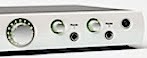
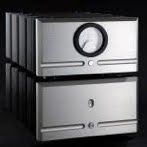
The Mytek Audio room is showing that this company just keeps pushing and moving forward. I saw the Empire Streamer DAC at the Florida Show. It was just set up on a side table as a static display and the room was more about the HeadPhone arena. In 2020, Mytek announced the Empire, but the Pandemic and the production and shipping problems have delayed production until now. So at Axpona, the Empire was front and center, with two Empire Monoblocks and a pair of Wilson Audio Shasha DAW speakers. We are now in the stratosphere,; my guess around $120k. The sound is what one would expect. Total effortless presentation. Like a 20-year-old track star at rest. The power is there, ready for whatever is next. Just absolutely there, as if you were three rows back at your favorite venue.
The Mytek Audio room is showing that this company just keeps pushing and moving forward. I saw the Empire Streamer DAC at the Florida Show. It was just set up on a side table as a static display and the room was more about the HeadPhone arena. In 2020, Mytek announced the Empire, but the Pandemic and the production and shipping problems have delayed production until now. So at Axpona, the Empire was front and center, with two Empire Monoblocks and a pair of Wilson Audio Shasha DAW speakers. We are now in the stratosphere,; my guess around $120k. The sound is what one would expect. Total effortless presentation. Like a 20-year-old track star at rest. The power is there, ready for whatever is next. Just absolutely there, as if you were three rows back at your favorite venue.
"It is amazing how Mytek was able to put so much in one approximately 17-inch wide chassis. This is a cost no object, dual-mono, all balanced audio path, in both analog and DAC circuits. Three oversized linear power supplies for digital, for the left and right DAC/analog circuitry.
It is amazing how Mytek was able to put so much in one approximately 17-inch wide chassis. This is a cost no object, dual-mono, all balanced audio path, in both analog and DAC circuits. Three oversized linear power supplies for digital, for the left and right DAC/analog circuitry, each using shielded low noise toroidal transformer with automatic adjustment to 100-240VAC.
There are nine analog preamplifier inputs, including state-of-the-art M/M, M/C nickel transformer-based phono pre, 2 analog pre-balanced inputs, each input with adjustable input sensitivity, independently selectable outputs, both balanced and RCA. The digital DAC inputs include Streamer, SPDIF, Optical, USB2, HDMI (2-channel), and Roon End Point, all w PCM DSD and MQA. The storage includes an internal 8TB SSD. Accepts all external USB3, USBC, and Network drives. The built-in Mytek os DAC/preamplifier platform allows for future functional upgrades and new DSP features of the DAC/Preamplifier to be released throughout the life of the product. Even the two Intel I7 CPU's can be upgraded as needed. This is the highest-tech Swiss Army Knife audio system I have seen.
 |
| Transparency is Benchmark's forte |
Benchmark/Aretai
Back down to earth for the last room I am reporting on, the Benchmark Media/Aretai room. The Aretai Contra 100s, from Latvia is a sealed 2.5-way, with a horn-loaded tweeter and dual 6-inch drivers. The front 6-inch driver is recessed in a waveguide. Since Aretai is calling this a 2.5 way the rear-firing 6-inch driver must be a slightly different slope. The frequency response is from 30 Hz to 25 kHz.
The source is an Aurender N200 music server/streamer. This is an upgraded replacement of A100 with Intel N4200 Quad CPU, stereo AKM 4490 Full-Decode MQA DAC with PCM up to 768kHz/32bit and DSD up to 256. It has single-ended Analog Outputs and a USB Digital Output with a full-color 6.9″ 1280 x 480 Wide IPS LCD. There is a 2 x 2.5" Tray for SSD or HDD for user-installed storage. The N200 increased SSD Cache to 240GB and a system memory of 8GB. There are 2 Isolated Gigabit LAN Ports and SPDIF Optical x 1 and Coaxial x 1 Digital Inputs. The power supply is linear with Super Capacitor-based UPS.
Back down to earth for the last room I am reporting on, the Benchmark Media/Aretai room. The Aretai Contra 100s, from Latvia is a sealed 2.5-way, with a horn-loaded tweeter and dual 6-inch drivers. The front 6-inch driver is recessed in a waveguide. Since Aretai is calling this a 2.5 way the rear-firing 6-inch driver must be a slightly different slope. The frequency response is from 30 Hz to 25 kHz.
The source is an Aurender N200 music server/streamer. This is an upgraded replacement of A100 with Intel N4200 Quad CPU, stereo AKM 4490 Full-Decode MQA DAC with PCM up to 768kHz/32bit and DSD up to 256. It has single-ended Analog Outputs and a USB Digital Output with a full-color 6.9″ 1280 x 480 Wide IPS LCD. There is a 2 x 2.5" Tray for SSD or HDD for user-installed storage. The N200 increased SSD Cache to 240GB and a system memory of 8GB. There are 2 Isolated Gigabit LAN Ports and SPDIF Optical x 1 and Coaxial x 1 Digital Inputs. The power supply is linear with Super Capacitor-based UPS.
The key to the LA4's extreme accuracy in gain/attenuation is its precision, custom implementation of the NEC-relay potentiometer that allows the the true audio detail to be front and center; no matter what the level.
The Benchmark LA4 Line and two Benchmark AHB2 power amps in bridge mode supplied the drive for the Aretai speakers. The LA4 is an extreme wide bandwidth (from 0.01 Hz to over 500 kHz) low distortion/extremely low-noise control unit with two balanced stereo inputs and two unbalanced stereo inputs. The line amplifier provides one balanced stereo output, one balanced mono sum, and one unbalanced stereo output. The key to its extreme accuracy in gain/attenuation is its precision, custom implementation of the NEC-relay potentiometer that allows the the true audio detail to be front and center; no matter what the level.

The Benchmark AHB2 amp is power house capable of producing 100 watts/ch in stereo mode to 480 watts in bridged mode. The AHB2 uses the new and revolutionary THX-patented AAA™ technology to virtually eliminate all forms of distortion. This technology uses feed-forward error correction to eliminate the distortion that is normally produced by the output stage.
I was very impressed with what I heard. The Aretai Founder, Janis Irbe was on hand and told me that this is “the little speaker that could” I agree and say that “it really does!!!” This was a very fine-sounding system. The surprising weight behind the music with the full range on tap, no glare, or nasties to be found anywhere. Just super. Aretai is working on a US distributor so if you are interested contact Aretai.
I was very impressed with what I heard. The Aretai Founder, Janis Irbe was on hand and told me that this is “the little speaker that could” I agree and say that “it really does!!!” This was a very fine-sounding system. The surprising weight behind the music with the full range on tap, no glare, or nasties to be found anywhere. Just super. Aretai is working on a US distributor so if you are interested contact Aretai.
Axpona quite a success
So there you have it. I touched on highlights of Axpona 2022. High-end is a niche market, and there was no evidence of smallness here. Our industry had a great showing. It is alive and better than ever. I did not touch on the continuous
seminars taking place in the Marketplace, which was also busy with heavy commerce of vinyl and widget procurement. There was a ballroom full of Headgear and two nightly concerts. I did say big and busy, didn’t I?
seminars taking place in the Marketplace, which was also busy with heavy commerce of vinyl and widget procurement. There was a ballroom full of Headgear and two nightly concerts. I did say big and busy, didn’t I?
Editor's Note: Paul Elliott is along-time audiophile who started his audio obsession by building Heathkits in the early 1960s. He has been a key player in the growth of the Capital Audiofest, the video/photo ace for the DC Hi-Fi Group and he runs his own web site, www.myaudiophrenia.com
EAN Founder John Gatski has been evaluating consumer, audiophile, home cinema and professional audio gear since 1988. In 1995, he created Pro Audio Review, and he has written for Sound-On-Sound, Audio, Laserviews, Enjoy The Music, The Audiophile Voice, High Performance Review, Radio World and TV Technology. Everything Audio Network is based in Kensington, Md. Articles on this site are the copyright of the ©Everything Audio Network. Any unauthorized use, via print or Internet, without written permission is prohibited. John Gatski can be reached via email: jmgatski@gmail.com